IN SHORT
Alpha arbutin and vitamin C are the two most common ingredients in care aimed at uneven tone and the look of dark spots. Alpha arbutin is a direct tone-evening ingredient and is usually well tolerated, even by sensitive skin. Vitamin C is a strong antioxidant: as well as a brighter look, it supports the skin against everyday environmental stress. They can be used together, and many formulas already combine them. Whichever you choose, results stay limited without daytime sunscreen.
When you look for a product for dark spots and uneven tone, two names appear on labels most often: alpha arbutin and vitamin C. Both are called "brightening", so they are often thought of as interchangeable. In fact they work differently and suit different needs. In this guide we compare the two, explain which suits which skin, and show how to use them together in a routine.
What is alpha arbutin?
Alpha arbutin is a more stable form of arbutin, which occurs naturally in plants such as bearberry. By slowing down the production of melanin, the pigment that gives skin its colour, it helps darker-looking areas look more even over time. In cosmetics it is usually used at 1–2%.
- It is generally gentle, with a low risk of irritation, and is often chosen for sensitive skin.
- It doesn't make skin sun-sensitive and can be used morning and evening.
- It appears in formulas used on the face as well as on body areas with colour differences, such as underarms, knees and elbows.
What is vitamin C?
Vitamin C (ascorbic acid and its derivatives) is skin care's best-known antioxidant. It supports the skin against free radicals created by sunlight and pollution, revives a dull look and, with regular use, helps reduce the look of uneven tone. It is also known for supporting the skin's own collagen.
- Pure vitamin C (L-ascorbic acid) can break down easily with light and air; it should be stored in dark, airtight packaging.
- At high strengths it can cause stinging or redness in some skin; derivatives are usually gentler.
- Because of its antioxidant support, it is mostly used in the morning under sunscreen.
For more, see our article What does vitamin C do for the skin?
The differences: which one for what?
| Alpha arbutin | Vitamin C | |
|---|---|---|
| Main role | The look of spots and uneven tone | Antioxidant support, vitality, a brighter look |
| Tolerance | Usually gentle | Depends on formula and strength |
| When? | Morning and/or evening | Mostly morning |
| Stability | Stable | Can be sensitive to light and air |
| Body use | Common in underarm, knee, elbow formulas | Mostly in face care |
In short: if visible spots and colour differences are your priority, alpha arbutin stands out; if dullness, a tired look and daytime antioxidant support are your priority, vitamin C does. For most people the best results come from using both.
Can they be used together?
Yes. Alpha arbutin and vitamin C complement each other and can be used in the same routine, even in the same product. One focuses on the look of uneven tone while the other adds antioxidant support and vitality. Niacinamide and liquorice root extract often accompany this pair; for more on niacinamide, see our niacinamide guide.
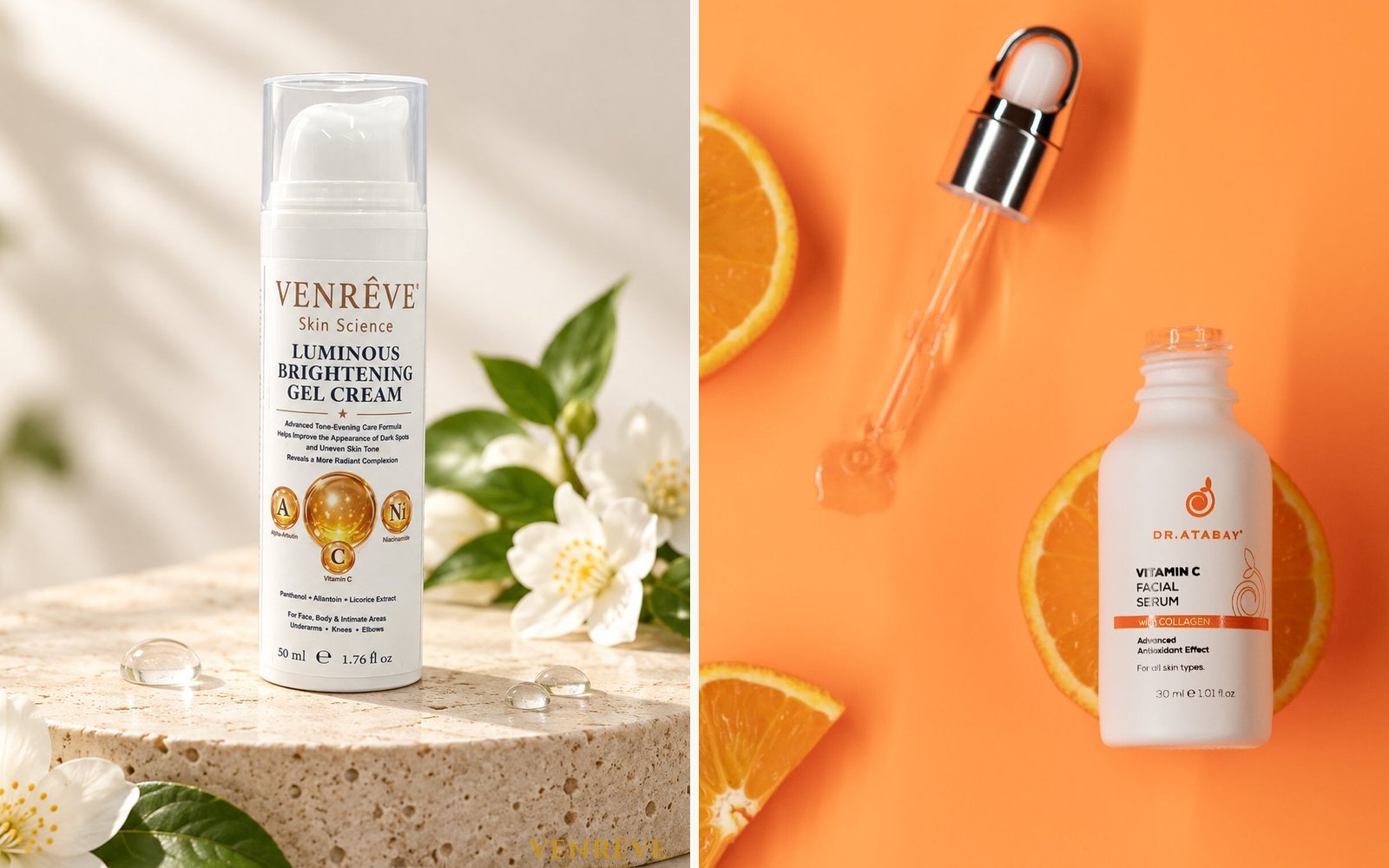
VENRÊVE Luminous Brightening Gel Cream brings together alpha arbutin, vitamin C, niacinamide and liquorice root extract in one light gel-cream formula. It can be used on the face as well as on underarms, knees and elbows.
A sample routine
Morning
- A gentle cleanser (such as VENRÊVE Gentle Cleansing Gel).
- Vitamin C serum: Dr. Atabay Vitamin C Serum.
- Moisturiser or a brightening gel cream.
- Sunscreen: Dr. Atabay SPF 30 Collagen Sun Cream. Skip this step and care aimed at the look of spots loses much of its effect.
Evening
- Cleanse.
- Tone-evening serum: Dr. Atabay Anti-Spot Serum or a product with alpha arbutin.
- Moisturiser / night cream.
For the order in which to apply products, see our skin care order guide.
Things to keep in mind
- Patience: changes in the look of uneven tone usually need 6–8 weeks of regular use.
- Sun protection: every day, on cloudy days and in winter too. Why sunscreen every day?
- Less, but consistently: start with one or two products rather than trying many actives at once.
- Patch test: try a new product on a small area first.
- New, growing, or shape- or colour-changing spots should not be managed with cosmetics; have them checked by a doctor.
For causes of spots and a general care approach, see our dark spots article, and for colour differences on the body, our underarm darkening guide.
IMPORTANT
This article is for general information. Cosmetic products do not replace medical treatment. If redness, itching or stinging doesn't settle, stop using the product and see a doctor. During pregnancy and breastfeeding, discuss the products you use with your doctor.
Frequently Asked Questions
Can alpha arbutin and vitamin C be used together?
Yes. The two ingredients complement each other and can be used in the same routine, even in the same product.
For the look of spots, is alpha arbutin or vitamin C better?
If visible spots and colour differences are your priority, alpha arbutin stands out; for dullness and antioxidant support, vitamin C does. For most people the best results come from using both.
Can alpha arbutin be used during the day?
Yes. Alpha arbutin doesn't make skin sun-sensitive and can be used morning and evening. Always finish with sunscreen during the day.
Can sensitive skin use alpha arbutin?
Alpha arbutin is usually gentle and is often chosen for sensitive skin. Still, patch-test a new product on a small area first.
How long until I see results?
Changes in the look of uneven tone usually need 6–8 weeks of regular use together with daily sun protection.